

Partakers of the divine nature. Not admirers of God. Not merely obedient servants of God. Partakers of His nature.
The Fathers of the Church did not shrink from this. On the contrary, they made this statement central to their theology of salvation, expressing it in an axiom that runs through St. Irenaeus and St. Athanasius and is echoed in § 460 of the Catechism of the Catholic Church: the Son of God became man so that man might become God. The Greek word for this is theosis; in English, it is commonly called divinization or deification. The vocabulary is more familiar to Eastern Christians, but the doctrine belongs to the common Christian inheritance, and the Catholic Church fully affirms it. It is important to say what this statement does not mean, because the expression can be startling. It does not mean that man becomes God by nature. The distinction between Creator and creature is absolute and remains for all eternity. The word carrying the full weight is participation: like iron in a fire that becomes incandescent and burns without ceasing to be iron and without becoming the source of the fire. The image comes from the Fathers, and it is difficult to improve upon.The process does not begin with our effort. It begins with a sacrament.
In Baptism, a person receives sanctifying grace, which is not merely a divine favor, a feeling, or permission to enter heaven. It is a real quality infused into the soul, through which the person begins to participate in the life of God. Something objectively new comes to exist in that creature, which is why Baptism is not repeated: one cannot be born twice. From there, a process of transformation begins. Tradition calls it configuration or conformity to Christ: grace gradually reshapes the person until the likeness to Christ, obscured by sin, is restored — and restored, in fact, at a level higher than the original, something the liturgy of the Easter Vigil celebrates without hesitation. This is the point that reorganizes the spiritual life, and it is worth stating slowly: the Christian life is not primarily a moral effort. It is a process of transformation in which our part is to cooperate. The difference is decisive in practice. Someone who understands the Christian life as moral effort keeps trying to become better, measures progress by the number of failures, and becomes discouraged because failures never entirely disappear. Someone who understands it as transformation learns to consent to a work that is not their own: receiving the sacraments, praying, obeying, and allowing God to work. Effort remains real and necessary, but its place has changed. It is no longer the cause of transformation; it is cooperation with it.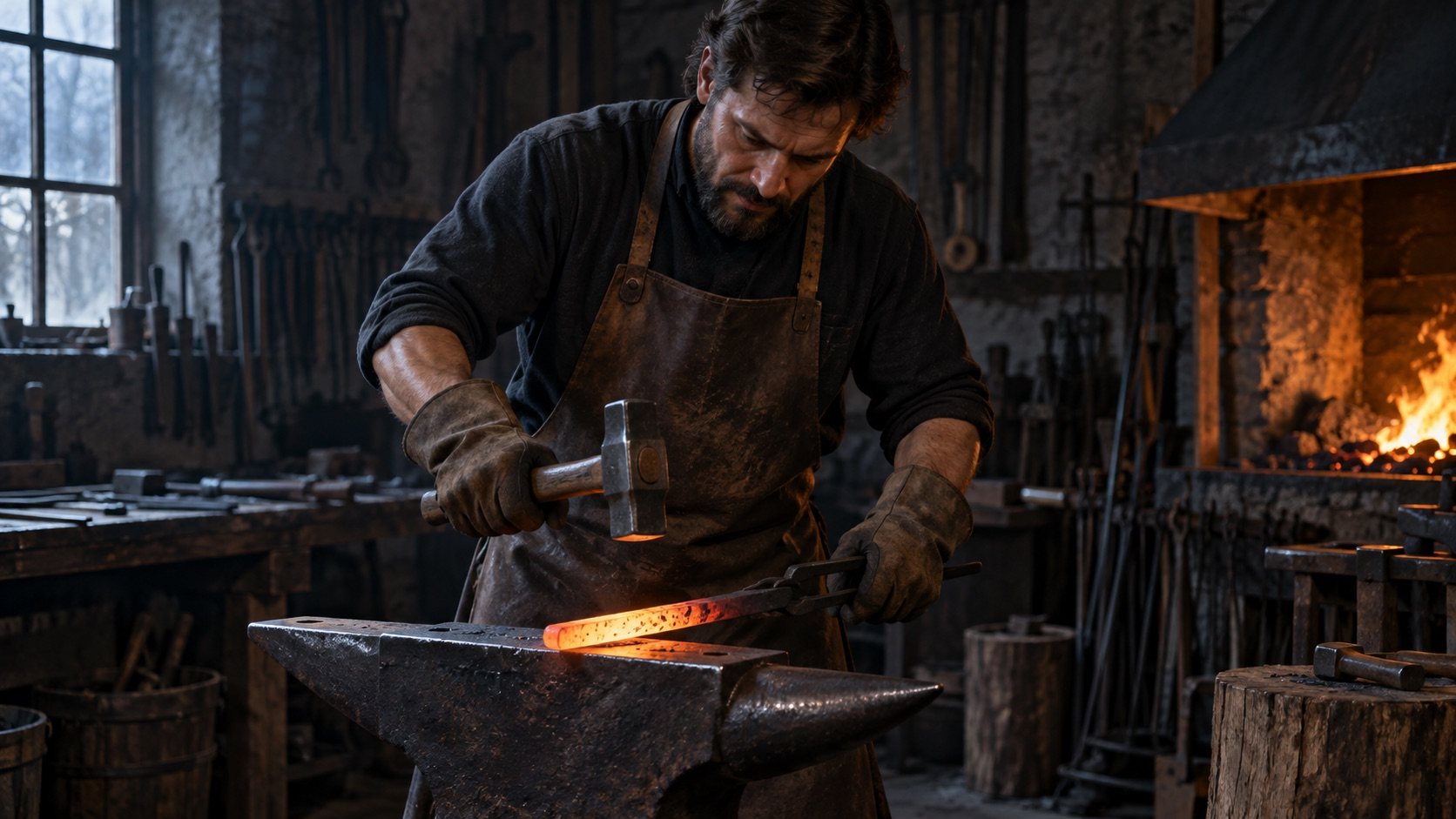
What happens to that person?
Purgatory answers that question. It is not a prison or a leftover punishment: it is the completion of a process left unfinished. It is the final purification and transformation of what earthly life did not complete. The Catechism defines it in these terms (§§ 1030–1032), and the Council of Trent defined it as a doctrine of faith in 1563. Seen this way, the doctrine ceases to be gloomy and becomes one of the most consoling teachings the Church possesses. It says that God does not abandon a soul that died loving Him simply because the work was unfinished. He completes it.What is the difference between suffering in this life and suffering in purgatory?
The answer lies in the will, and it is precise in a way that also sheds light on our present condition. In this life, the human will is unstable. It fluctuates. At one moment it wants God; at another, the opposite. It adheres and retreats; it loves and then pulls back. Because of this instability, earthly suffering is ambiguous: it can sanctify or it can harden. The same illness, the same grief, the same humiliation can draw one person closer to God and push another farther away — and sometimes do both in the same person in different weeks. What decides the matter is not the suffering itself, but what the will does with it. In purgatory, the will is fixed on God. The fundamental choice has already been made and is irrevocable; no further wavering is possible. For that reason, every suffering there is, without exception and without ambiguity, sanctifying. Nothing is wasted. Every pain is precisely the purification that was still needed. This does not make purgatory easy; tradition is unanimous that it involves intense suffering. But it helps explain the striking observation of St. Catherine of Genoa in her Treatise on Purgatory: the souls in purgatory suffer a pain beyond comparison on earth and, at the same time, experience a joy beyond comparison, because they know where they are going and know that every moment of that pain brings them closer. And from this comes the lesson for us: the difference between suffering that sanctifies and suffering that merely wounds lies in the disposition of the will. There is a classic difficulty that deserves a direct answer: if God knew that Adam and Eve would sin, why did He allow it? And more broadly, if God knows everything beforehand, in what sense are we free?Three statements — and all three must be held together.
First: God is outside time. He does not "foresee" the future in the sense of mentally anticipating what does not yet exist. For God there is no before or after: all of time is simultaneously present to Him. Boethius formulated this with extraordinary precision in The Consolation of Philosophy (Book V), defining eternity as the simultaneous and perfect possession of an unlimited life. From him comes the solution of the "eternal present": God does not see the future ahead of time; He sees everything as present. This dissolves the difficulty as it is usually stated. God’s knowledge of my free act does not determine it, just as my memory of a past act did not determine that act. Knowledge is not causation. Second: God knows sin, but He does not cause it. He permits it, which is a different category. Sin is a privation, a lack of good, and its proper cause is the created will that turns away. St. Thomas addresses this problem in the Summa Theologiae (I, q. 14, a. 13). Third, and this is the heart of the answer: God never violates human freedom. Not because of some abstract respect for autonomy, but for a much more serious reason.Freedom is a condition for the capacity to love.
A love that could not be refused would not be love. It would be mere functioning, like a mechanism responding to a programmed stimulus. If God wanted creatures capable of loving Him, He necessarily had to create them capable of refusing Him; the same faculty that makes the "yes" possible also makes the "no" possible. There is no way to have one without the other. That is why freedom is called a gift, not a calculated risk. It is the price Omnipotence itself accepts in order to have, instead of perfect servants, children capable of love. And that is also why original sin is so grave: it was not the violation of an arbitrary rule about a fruit, but the use of the highest gift against the Giver.
A final word, because this is a sorrow many families carry in silence.
When a child dies, the Church does not ask the parents to abandon hope. If the child was baptized, the teaching is serene: the child died in a state of grace, and baptismal grace is precisely what introduces a person into the life of God. And when there was no Baptism, the Church pronounces no condemnation: she entrusts the child to the mercy of God, who desires all people to be saved and whose ways are not limited to those revealed to us (Catechism, § 1261). It is worth adding something about the sacraments administered at the end of life — emergency Baptism, the Anointing of the Sick — which the urgency and pain of a hospital can make seem secondary. They are not. Quite the opposite: they are the moment when the Church does the one thing that truly matters at that hour. A family that manages, in the middle of the worst day of its life, to provide this has done for the loved one more than all available medicine could do. You have probably thought of holiness as something to be achieved, something built through effort, discipline, and time.What if it is, above all, something we allow?
Not that effort is unnecessary; it is not. But the work belongs to God, and our part is not to obstruct it. What changes, once this is understood, is the place of discouragement: failure stops being proof that it will never work and becomes one more thing to surrender. This same truth — that faith transforms a person from within rather than merely adding information — lies at the foundation of Acutis Academy and the formation we offer each student.Discover Acutis Academy and an education in which faith is the foundation, not an add-on.

