

Every decision about a child’s education seems small from day to day: enrollment, the schedule, Friday’s test. But, added up over the years, these decisions answer the only question that really matters: who is this child becoming?
An education that truly forms does not just deliver content. It awakens capacities, and those are what a child carries for life, long after the last test has been forgotten.
1. Thinking for themselves
The first, and perhaps the most urgent in an age like ours, is independence of thought.
A child who learns to think does not swallow everything the screen, the algorithm or a classmate tells them. They know how to ask questions, weigh arguments, tell what is solid from what is just noise, and reach their own conclusions. In a world that pours information and manipulation over them all the time, this capacity is almost a suit of armor.
What changes: instead of being carried along by the opinion of the majority or the latest fashion, they become someone who decides with their own mind. And this stays with them from adolescence into adult life, in small choices and in big ones.
2. Truly understanding, not just memorizing
There is an enormous difference between knowing something and understanding it. Memorizing is holding on to a piece of information until the test; understanding is grasping the why, connecting one piece of knowledge to another, and being able to use what you know when facing a problem you have never seen before.
A child who understands does not collect loose facts. They build a web in which everything connects, and that is why they learn each new thing more easily: they have somewhere to fit it.
What changes: knowledge stops evaporating after the test. It stays, becomes a repertoire, becomes reasoning, becomes part of who the child is.
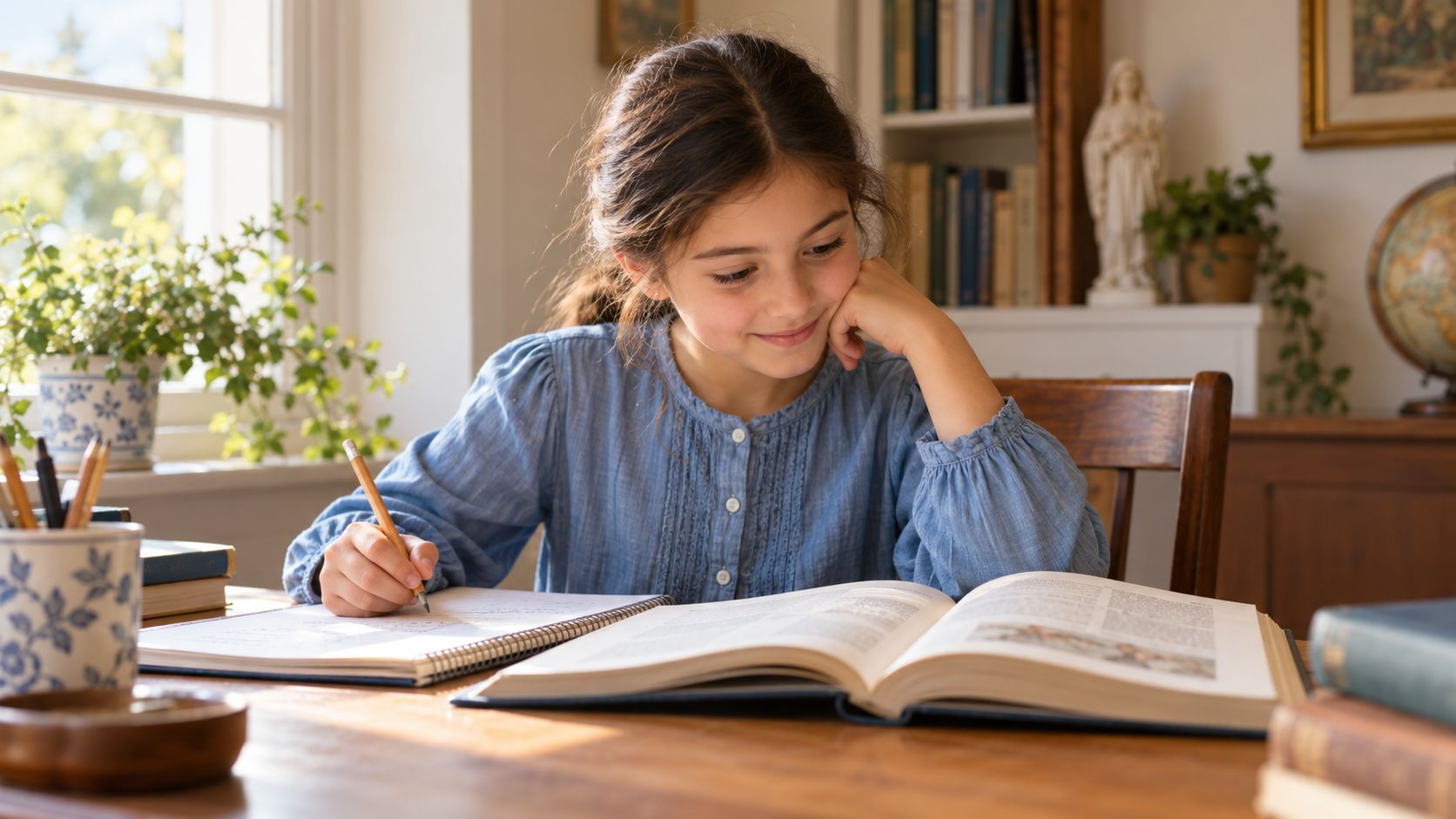
3. Expressing themselves with clarity and strength
What good is thinking well if you cannot say what you think? The capacity to express oneself, to speak clearly, write well, defend an idea, argue without attacking, is one of the rarest and most valuable.
A child who masters their own words can be understood, can persuade, can take a stand without fear. And, since we think with words, those who express themselves better also think better: the two grow together.
What changes: in a life where almost everything depends on communicating, a job interview, a relationship, an idea to be defended, this child starts ahead and stays ahead.
4. Having a rich repertoire
A repertoire is the set of references, the vocabulary, the books, the history, the ideas, that a child carries within. And it literally determines the size of the world they are able to inhabit and think about.
Those with a small repertoire see the world through a crack. Those with a rich one see connections, understand contexts, recognize what lies behind things. A good repertoire is not erudition for show; it is the raw material the intellect works with.
What changes: the child stops consuming the world on the surface and begins to understand it in depth: a book, a piece of news, a work of art, a conversation, everything gains layers that used to go unnoticed.
5. Loving knowledge
This is perhaps the most beautiful of the intellectual capacities: learning to love learning.
Most children learn, in ordinary schools, to associate study with boredom and obligation. A true education does the opposite: it awakens curiosity instead of putting it out, and shows the child that knowing is one of the greatest joys there is. Whoever discovers this does not stop learning when school ends. They keep learning their whole life.
What changes: study stops being a burden to endure and becomes a pleasure to seek. And this is a difference that lasts forever, because an adult who loves learning never stops growing.

6. Telling good from evil
Here formation rises from the intellect to character, and the difference is decisive.
A child can develop all the previous capacities and still use them for evil, if they do not learn to discern right from wrong. Intelligence without virtue is a dangerous tool. That is why a true education does not form only the mind; it also forms the will and the heart, teaching the child to recognize the good, to love it and to choose it, even when it is hard.
What changes: the child becomes not only capable, but trustworthy. Someone who puts everything they know at the service of what is good, and that is the difference between forming someone brilliant and forming someone of integrity.
7. Growing in faith and in love for the things of Heaven
And we come to the most important of all. Not last because it is lesser, but because it is the crown, the one that gives meaning to all the others.
What good is it to gain the whole world, intelligence, repertoire, success, and lose one’s own soul? A child can become everything we have described so far and still live without what is essential, if they do not know, love and serve God. Faith is not an add-on to education, one more subject on the schedule. It is the foundation that sustains and directs everything else.
A child who grows in faith learns that there is something greater than themselves, that the truth they seek in their studies has an Author, and that life is not reduced to what is achieved here. They turn their heart to what is eternal. And this is what turns a good formation into a complete one: preparing the child not only for this life, but, above all, for eternity.
What changes: everything. Because a child formed in the faith has, beyond a prepared mind, a compass for their whole life and a destiny that goes beyond themselves. The other six capacities prepare them to live well. This one prepares them to live well and for the life that never ends.
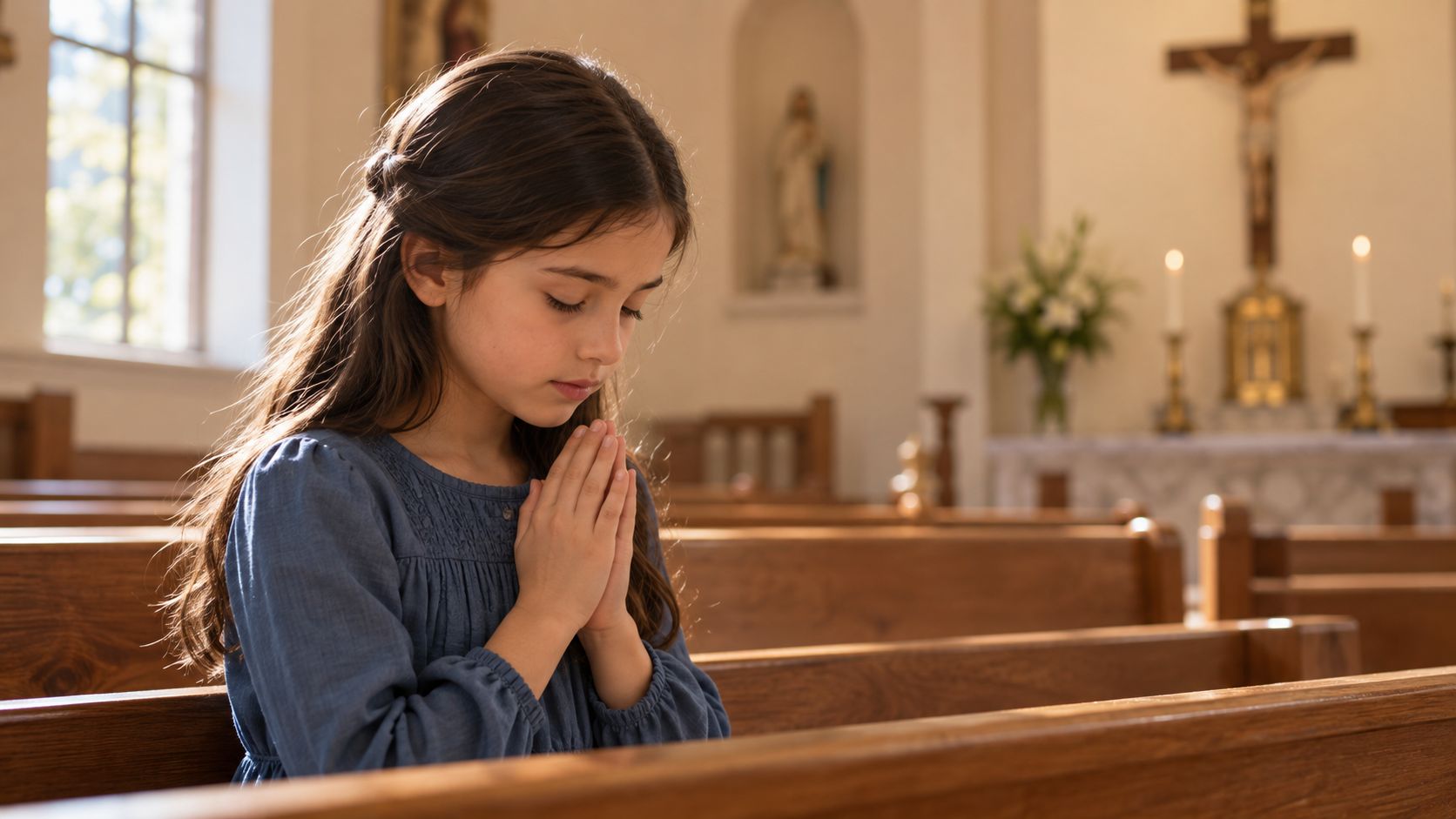
What kind of person do you want to help form?
Notice that none of these capacities shows up on a report card. None of them is a grade. And yet they are what remains when everything else is forgotten.
That is why choosing a school is much more than choosing where your child will spend the day. It is choosing what kind of person you want to help them become: someone who thinks, understands, expresses themselves, has a rich repertoire, loves knowledge, knows how to discern the good, and, above all, loves God.
In the end, we are not just forming students. We are helping to form people, for this life and, above all, for eternity.


